
Uterine Prolapse: Stages, Symptoms & Treatment Options At Every Age
By Dr. Archana Agarwal, Gynecologist & Fertility Specialist
Uterine prolapse is one of those conditions which a great many women experience and very few feel comfortable talking about. The sensation of something coming down, a feeling of heaviness, or a bulge which you can actually see can be distressing and isolating, and yet prolapse is common, it is treatable, and it is nothing at all to be ashamed of. Dr. Archana Agarwal wants women of every age to know that effective options exist, running from simple exercises all the way through to definitive surgery, and that you do not have to simply live with the discomfort. Understanding the stages and the choices in front of you is the first step towards feeling like yourself again.
What Is Uterine Prolapse?
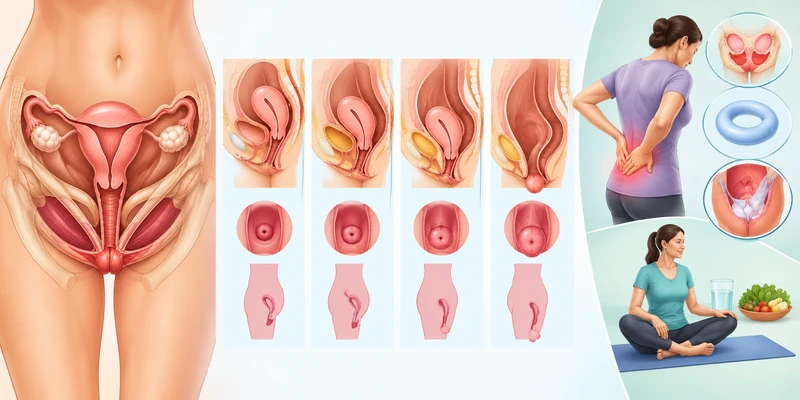
Uterine prolapse occurs when the muscles and the ligaments of the pelvic floor weaken, which then allows the uterus to descend from its normal position into the vagina or beyond it. It is part of a broader group of conditions called pelvic organ prolapse, shortened to POP, and these affect around 15% of women. Because the pelvic floor supports several organs together, a prolapse can involve the bladder or the bowel as well, and those sometimes occur alongside the descent of the uterus.
What Causes It?
A prolapse develops when the support structures of the pelvic floor have been stretched or damaged over a period of time. The factors which commonly contribute to it include:
- Pregnancy and vaginal childbirth, particularly where the deliveries were multiple or difficult
- The natural drop in estrogen which follows menopause
- Ageing, and the gradual weakening of connective tissue which comes with it
- Chronic straining, whether from constipation, from heavy lifting or from a cough which persists
- Obesity, which increases the pressure bearing down on the pelvic floor
- A family history of weakness in the connective tissue
What Are the Stages of Uterine Prolapse?
Doctors measure prolapse using the Pelvic Organ Prolapse Quantification system, which is shortened to POP-Q, and it classifies prolapse into stages from 0 to IV. Knowing which stage you are at is what helps guide the treatment you are offered.
|
Stage |
What it means |
|
Stage 0 |
No prolapse; normal support |
|
Stage I |
The uterus descends slightly into the upper vagina |
|
Stage II |
Descent reaches near the vaginal opening |
|
Stage III |
The uterus protrudes beyond the vaginal opening |
|
Stage IV |
Complete prolapse; the uterus is fully outside |
The thing to note here is that the stage does not always match the distress, because some women with an earlier-stage prolapse have significant symptoms while others whose descent is far more advanced feel relatively little.
What Are the Symptoms?
The symptoms of prolapse range from mild all the way to genuinely life-disrupting. You may notice:
- A feeling of heaviness or pressure in the pelvis, or of something coming down
- A bulge at the vaginal opening which you can see or feel
- Urinary symptoms, so leakage, urgency, or difficulty in emptying the bladder
- Difficulty with bowel movements
- Discomfort during intercourse, or reduced sensation
- A low backache which gets worse as the day goes on
Symptoms often feel worse after you have been standing for long periods, and they ease off when you lie down.
What Are the Treatment Options?
Which treatment suits you depends on how severe your symptoms are, on your stage, on your age, and on whether you wish to preserve your fertility. Importantly, asymptomatic prolapse does not require treatment at all, and observation is a perfectly appropriate course to take. When treatment is needed, the options fall into three broad groups.
Conservative Options
For the milder cases, the non-surgical approaches are the first line:
- Pelvic floor muscle training: targeted exercises which strengthen the supporting muscles, and these are at their most effective in early-stage prolapse.
- Lifestyle measures: managing your weight, treating constipation, and keeping away from heavy lifting.
Pessary
A vaginal pessary is a soft, removable device which supports the uterus from within. It is an excellent choice, inexpensive and non-invasive, and it is a good first-line option especially for a woman who wishes to avoid surgery or who carries a higher surgical risk. Many women learn to manage a pessary entirely by themselves.
Surgery
For prolapse which is more advanced or more bothersome, surgical repair offers results which last. The procedures may repair and reinforce the pelvic floor, or in some cases remove the uterus. Modern prolapse surgery has high success rates, and studies report symptom cure rates of up to 82 to 92% for the associated urinary symptoms once a good anatomical repair has been done. Which procedure is right for you depends on your anatomy, on your symptoms, and on whether you wish to preserve your uterus.
Prolapse at Every Age
Treatment here is genuinely flexible with age. A younger woman who hopes to have children may favour conservative measures, or a surgery which preserves the uterus. Women around menopause often benefit from a combination of pelvic floor therapy and, where it is relevant, attention to the loss of estrogen. Older women, along with those who have other health conditions, frequently do very well with a pessary which avoids surgery altogether. There is a suitable option at every stage of life.
Dr. Archana Agarwal treats prolapse with the openness and the care which it deserves, so no embarrassment, just practical solutions. Whether your symptoms call for simple exercises, for a pessary or for a surgical repair, the goal is to restore your comfort and your confidence. If you have noticed any of the symptoms described here, please do not suffer in silence, because a straightforward evaluation can point you towards relief which is real and lasting.
This article is for general educational purposes and is not a substitute for personalised medical advice from your fertility specialist or embryologist.
