
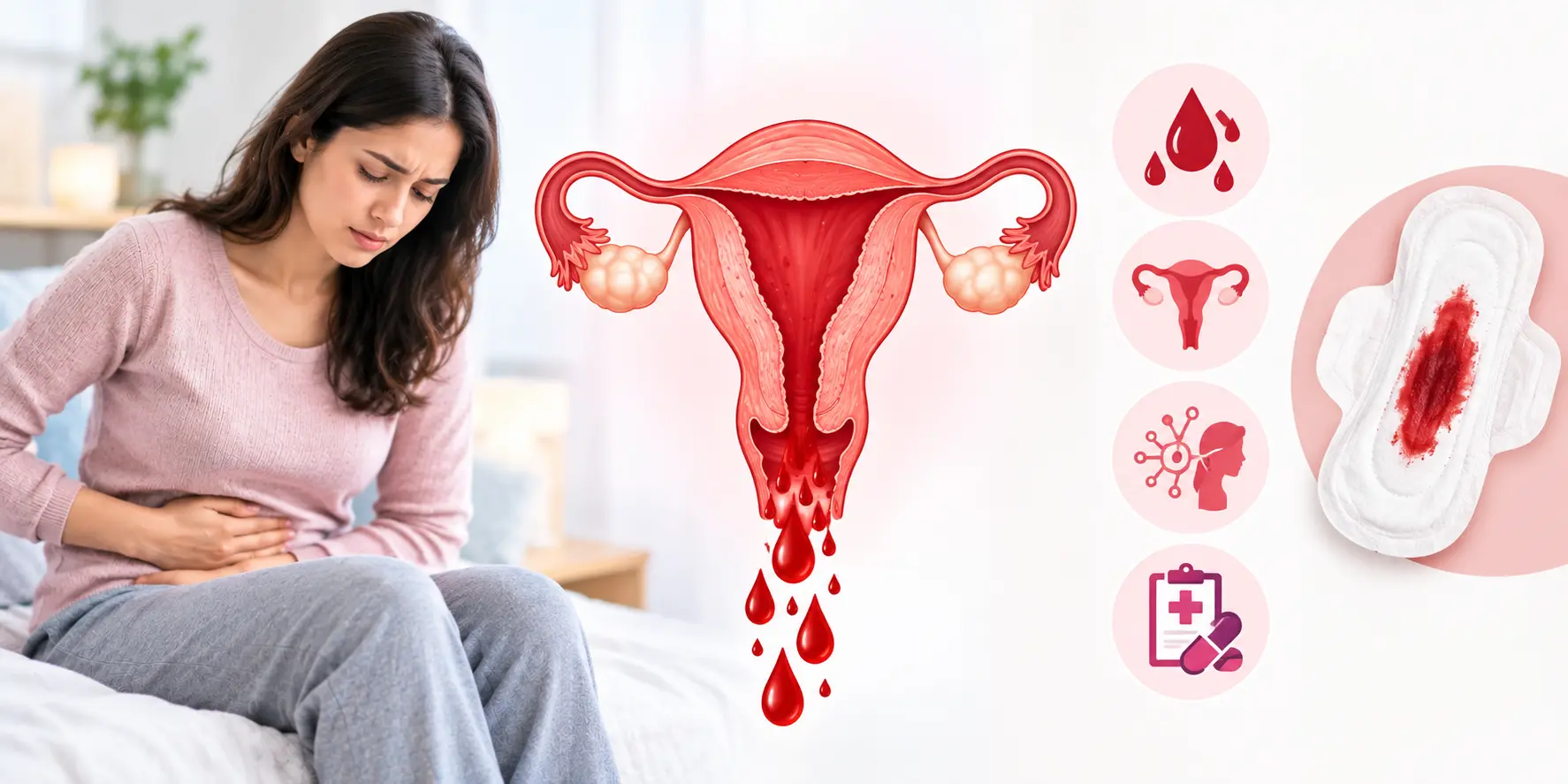
Heavy Menstrual Bleeding: Causes, Risks & Modern Treatment Options
By Dr. Archana Agarwal, Gynecologist & Fertility Specialist
You might not be aware, but heavy periods are one of the most common reasons a woman books an appointment with a gynecologist, and they are also one of the most under-reported.
A great many women assume that soaking through pads, passing large clots and planning their week around their cycle is simply how periods are. It is not. Heavy menstrual bleeding, which is known medically as menorrhagia, is a genuine medical condition which affects your quality of life, and when it is left unchecked, it can go on to harm your health as well.
Dr. Archana Agarwal wants women to know that this is treatable and that the options available today are more effective and less invasive than they have ever been.
What Counts as Heavy Menstrual Bleeding?
Judging whether your own bleeding is too much is harder than it sounds, mainly because we so rarely compare notes with anybody else about it. Clinically, you may have menorrhagia if any of the following apply to you:
- Bleeding which carries on for more than seven days
- Soaking through a pad or a tampon every hour, for several hours together
- Having to change your protection during the night
- Passing blood clots which are larger than a coin
- The symptoms of anemia, such as fatigue or breathlessness
Menorrhagia is common. Around 10 to 15% of women experience heavy periods, and it becomes more frequent as women move towards menopause.
What Causes Heavy Menstrual Bleeding?
Heavy bleeding is a symptom, and it is not a diagnosis, which means that identifying what is causing it underneath is the foundation on which any effective treatment gets built. The common causes include:
- Hormonal imbalance: ovulation which is irregular, something common in PCOS, perimenopause and thyroid disorders, can cause the lining of the uterus to thicken far more than it should.
- Uterine fibroids and polyps: benign growths which increase the surface area of the lining, or which distort the cavity of the uterus.
- Adenomyosis: this is what happens when tissue from the uterine lining grows into the muscular wall.
- Bleeding disorders: between 10 to 30% of women who have menorrhagia turn out to have an underlying clotting disorder, and von Willebrand disease is the most common one among them.
- Medications: blood thinners and certain contraceptive devices as well.
- Precancerous or cancerous changes, though rarely: and this is the reason heavy bleeding which persists always deserves a proper evaluation.
Why Shouldn't You Ignore It?
Beyond the disruption it causes to your days, heavy bleeding carries real risks to your health. The most significant of these is iron-deficiency anemia, which develops when the blood you are losing outpaces your body's ability to replace it.
According to ACOG, the blood loss from heavy periods can lead to anemia that causes shortness of breath and increases the risk of heart problems. Chronic anemia leaves a great many women exhausted, foggy and unwell for years at a stretch without ever realising where it is coming from.
Moreover, some of the conditions which sit behind heavy bleeding, and precancerous changes are among them, need to be detected early, and that is another reason not to wait this out.
What Are the Modern Treatment Options?
The good news here is that treatment is highly effective and that it usually begins with the least invasive option there is. Which one turns out to be right for you depends on the cause, on your general health, and on whether you wish to have children in the future.
|
Option |
How it works |
Best suited for |
|
Tranexamic acid |
Reduces bleeding by stabilising clots; taken only during the period |
Those wanting non-hormonal, on-demand relief |
|
NSAIDs (e.g. ibuprofen) |
Reduce bleeding and cramping |
Mild cases, often alongside other options |
|
Hormonal IUD |
Thins the lining; highly effective |
Long-term control, also provides contraception |
|
Oral contraceptives/progestins |
Regulate and lighten cycles |
Those needing cycle regulation |
|
Endometrial ablation |
Destroys the uterine lining |
Those who have completed their family |
|
Myomectomy |
Removes fibroids, preserves uterus |
Fibroid-related bleeding, fertility desired |
|
Hysterectomy |
Removes the uterus; definitive |
Severe cases when other options fail |
Medical management is almost always the starting point. As the Cleveland Clinic notes, treatment typically begins with medication and progresses to procedures only when that becomes necessary. Iron supplements are frequently added alongside, so that anemia is either treated or prevented while the underlying cause is being addressed.
When Should You See a Doctor?
It is important for you to know that you should not wait until you are severely anemic before you act. Go for an evaluation if your periods regularly interfere with your work or your daily activities, if you are passing large clots, if you are changing your protection every hour, or if you feel persistently tired and breathless. A sudden change in your bleeding pattern also warrants a review.
Heavy menstrual bleeding is never something which you simply have to endure. Dr. Archana Agarwal starts by finding the cause, and then we build a treatment plan around your symptoms and around the plans you have for your future, whether that turns out to be gentle medication or a definitive procedure. If your periods are controlling your life, help is available to you, and relief is very achievable.
This article is for general educational purposes and is not a substitute for personalised medical advice from your fertility specialist or embryologist
